Didn’t Answer Perfectly in an AI Interview — and That Taught Me Something Important in New Generation Job Hunting
Recently, AI has rapidly become part of the hiring process.
According to industry surveys, nearly 87% of companies now use AI in some stage of recruitment, such as resume screening or candidate evaluation.
In addition, around 40–50% of organizations are already applying AI directly to HR and recruiting tasks, and this number continues to grow each year.
Against this background, AI interviews are no longer experimental — they are becoming normal.
In this post, I’d like to share my personal experience of taking an AI interview as a biologist with a PhD background.
I didn’t answer everything perfectly, and I haven’t even received feedback yet.
But that experience taught me something important about how job hunting itself is changing in the age of AI.
This post would be useful for the following people:
- People taking an AI interview for the first time
- PhD holders or researchers applying for AI data trainer
- Scientists wondering how their expertise is evaluated by AI
👩🏻💼Background: My AI Interview Case
Before describing the interview itself, I’d like to briefly explain the context of my application.
I first came across this opportunity in November through LinkedIn. The role was for a biologist with a PhD background to contribute to AI data training, a position often described as an AI data trainer. Given my research background, I was curious about how biological expertise could be evaluated and used in an AI-driven workflow.
After submitting my CV and completing the initial registration, I received an email inviting me to take an AI interview two month later. Unlike traditional interviews, there was no scheduling with a human recruiter. Instead, I was asked to complete the interview(there was no given time frame).
I took the interview three days after receiving the invitation to prepare. The interview was conducted entirely by an AI system, without any human interaction. I answered a series of questions by speaking to my screen, knowing that my responses would later be analyzed(Both camera and voice recorded).
As of writing this post, I have not received any feedback or follow-up regarding the interview outcome. This lack of response itself became part of the experience and raised questions about how AI-based hiring processes operate behind the scenes.
Below is a simplified timeline of my AI interview journey.
So what kind of questions does an AI interview actually ask, and how does it feel to answer them?
💬What the AI Interview Asked Me
The AI interview started with a short self-introduction. I was asked to briefly explain my background and area of expertise, similar to the opening question in a traditional interview. There was no interaction or reaction from the system — I simply spoke to the screen and moved on to the next question.
After the introduction, the interview shifted to core biology topics — No questions related to my topics mentioned in my CV. The questions covered a surprisingly wide range of fundamental concepts rather than highly specialized details. The main topics included:
- The central dogma of molecular biology
- Protein modifications and their biological roles
- Concepts in population genetics
- The use of mouse models in recent biomedical and clinical research
What stood out to me was that these were not short, factual questions. They were open-ended prompts that required structured explanations. Based on my responses, the AI generated follow-up questions that asked me to clarify, expand, or explain my reasoning in more detail.
When I encountered a topic outside my direct area of expertise, I explicitly stated that it was not my specialization. In those cases, the interview did not force an answer or treat uncertainty as a failure. Instead, the system moved on to the next question.
Overall, the interview felt not only like a test of memorized knowledge but also like an evaluation of how I explain biological concepts, structure my thoughts, and handle uncertainty.
😶🌫️What the AI Interview Felt Like
Overall, the AI interview felt very different from a human-led interview. It was structured, fast, and emotionally neutral. Looking back, some parts of the experience were surprisingly helpful, while others were clearly challenging.
💪What Felt Surprisingly Helpful
The interview was conducted entirely in English, but a real-time transcript appeared on the screen as I spoke. This was one of the most reassuring features for me. Since I am not a native English speaker and I don’t always feel fully confident about listening accuracy, being able to see the transcript helped reduce anxiety. It allowed me to focus more on organizing my explanations rather than worrying about whether I had misheard something.
Another helpful aspect was that the process felt consistent and non-judgmental. There was no small talk, no facial expressions, and no human reaction. In a way, this reduced the social pressure that sometimes comes with face-to-face interviews. The system simply moved forward, question by question.
😵What Was Challenging (and What I Wish I Had Done Differently)
At the same time, the pacing was strict. If I stayed silent for around five seconds, the interview automatically moved on to the next question. There was no space to pause, reflect, or gather my thoughts for difficult questions. In that sense, silence itself functioned almost like an answer.
Another major difference was that I had no opportunity to ask questions. In traditional interviews, candidates usually have a moment to clarify expectations or ask about the role. Here, the interaction was completely one-directional: the system asked, and I answered. That made it harder to adjust my depth of explanation or to steer the conversation toward areas where I felt strongest.
📝What I Learned After the Interview
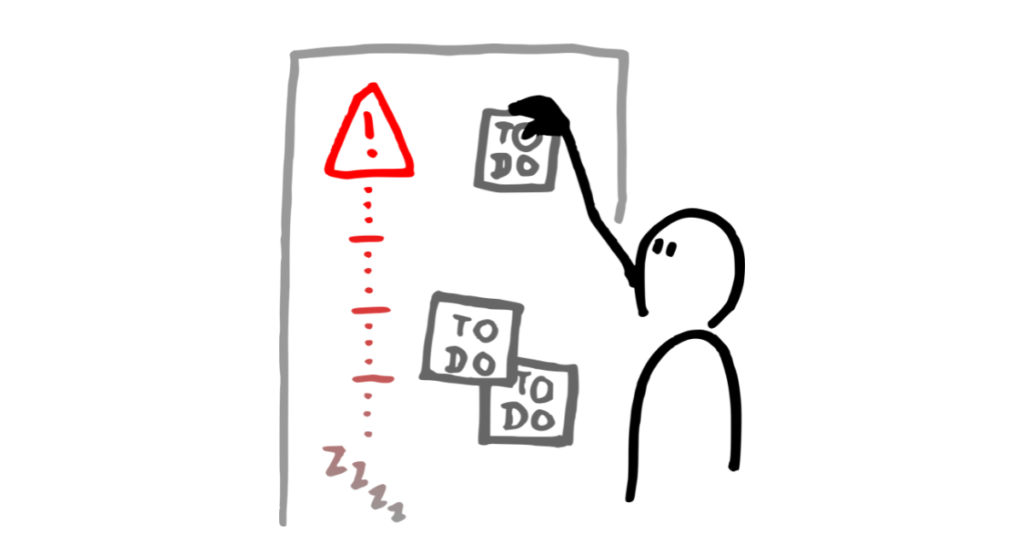
Because of this structure, I now think I should have handled unfamiliar topics more decisively. When I faced questions outside my expertise, I hesitated and tried to explain my limitations carefully. In hindsight, it would have been better to say clearly and quickly, “This is outside my specialization,” and move on. In an AI interview, spending too long on uncertainty does not create a better impression — it simply consumes time that could be used to demonstrate clarity and confidence in areas I can explain well.
To be honest, after finishing the interview, I felt disappointed in myself. I focused on what I couldn’t do rather than what I managed to explain well. But after some reflection, I realized there were important lessons to take away.
First, I need more practice in thinking aloud and structuring ideas logically in real time. Explaining complex concepts spontaneously is a skill, and like any skill, it improves with training. Second, I could have approached the interview in a more relaxed and composed manner. The absence of human feedback made the situation feel unusual, but remaining calm would likely have improved my clarity.
At the same time, there were things I did well. I had prepared my self-introduction in advance, just as I would for a traditional interview. That preparation helped me start confidently and set a clear tone from the beginning.
Although this is only my speculation, I suspect that the video recording itself may also be analyzed by AI. Beyond evaluating content, the system might assess delivery — tone, structure, confidence, or consistency — in order to identify candidates who match the intended profile for the role.
Ultimately, this experience made me realize something broader. In any field, it is crucial to understand the structure and rules of the game you are entering. AI interviews are not just conversations; they are systems with specific mechanics.
It reminds me of a board game. You begin with a certain set of cards — your skills, knowledge, and experience — and there is always an element of randomness. But success depends on understanding the rules, recognizing how the system works, and making strategic decisions based on the resources you already have.
As AI-driven hiring processes become more common, it will become increasingly important not only to prepare answers, but also to understand the structure of the evaluation itself. What kind of system is this? What does it reward? Given my current abilities, how can I perform strategically within those rules?
In the end, AI interviews may not be about perfection. They may be about playing the right game in the right way.